
Lip Filler Migration: What It Looks Like, Why It Happens and What to Do
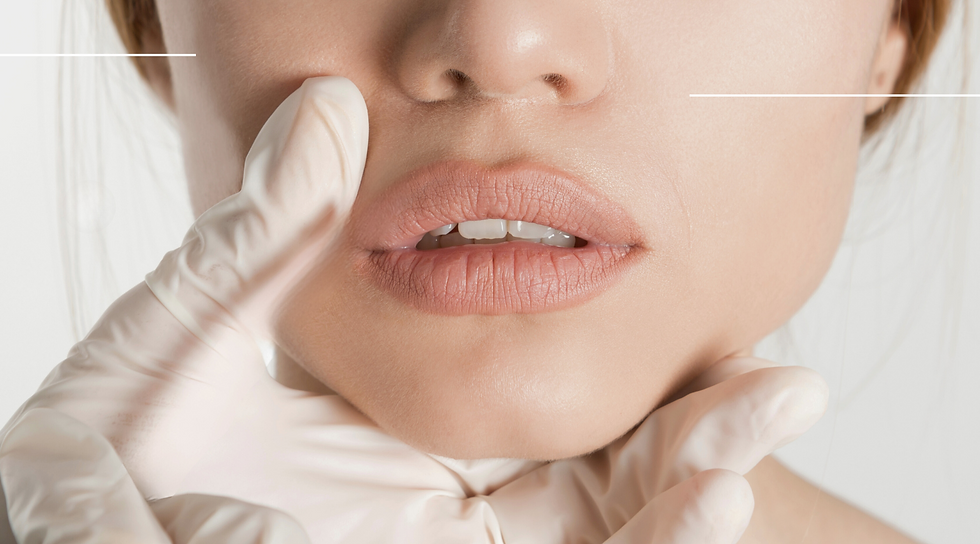
A woman sat down in my chair last month, pulled her top lip up gently with one finger and asked, "Is this normal?" She had a soft, puffy ridge sitting just above her lip line. It had been there for over a year. She had been told it was swelling, then told it would settle, and she had started avoiding side-on photos.
I see this more and more in my Fairfield clinic. People find me after spending weeks reading Reddit threads and Quora answers, and they arrive confused. Some are worried they have done permanent damage. Others have been told nothing is wrong when they can clearly see that something has changed.
So here is what I tell them, as plainly as I can.
What lip filler migration actually means
Migration means the product placed in your lips has moved outside the area it was meant to stay in. In the lips, that almost always means it has drifted just past the vermilion border, the line where the pink of your lip meets the skin above it.
It does not mean the product is travelling around your body. In most people it has moved a few millimetres. That small shift matters because the lip border is one of the sharpest, most defining lines on the face. When it softens, the whole mouth looks different.
How to tell if yours has moved
These are the signs I look for when someone comes in worried:
A ridge above the top lip. A soft fullness sits on the skin above the lip line. Online it gets called a "filler moustache" or a "lip shelf".
A blurred lip border. The crisp edge you used to have looks smudged, especially at the centre near the Cupid's bow.
A flattened philtrum. The two small vertical ridges between your nose and lip look shallower.
A top lip that projects forward further than the bottom lip, often called a duck lip.
Firmness or small lumps that you can feel when you press gently.
The easiest test is to purse your lips or smile in good light. Migration tends to show up more with movement than at rest, which is why many people notice it first in photos or on video calls.
One question I get a lot is whether it is migration or just swelling. Swelling from a recent treatment usually settles within one to two weeks. Fullness that is still there months later is worth having assessed.
Why it happens
There is rarely one single cause. In the clients I see, it is usually a combination of these:
Too much product over time. Every lip has a natural capacity. Once that is passed, the gel has nowhere to go except outward. This often builds up quietly, with top-ups every few months while earlier product is still there.
Product lasting longer than people expect. Many clients are told results last six to twelve months, so they top up on schedule. In reality, product can stay in the tissue much longer. I have written more about this in how long lip fillers last.
Placement and pressure. Product placed too close to the surface, right on the border, or injected with high volume and pressure is more likely to sit where it shouldn't. A published case report on migration lists injection technique, massage, muscle activity and pressure as possible mechanisms, and notes that low-volume, low-pressure treatment over more than one session is recommended to reduce the risk.
Constant movement. The orbicularis oris, the ring of muscle around your mouth, works every time you talk, eat, drink or kiss. That steady movement places pressure on whatever sits in the lips.
Technique. Even the direction of the needle may matter. A 2024 study of 216 women compared four lip injection techniques and found satisfaction was highest in the group where the needle was directed from top to bottom, with migration into the upper lip taken into account.
Can it happen years later?
Yes, and this is one of the most common worries I see online. Migration often becomes noticeable gradually. Someone who had small, careful treatments for years may only notice a change once enough product has built up, or as the lips and surrounding tissue change with age.
Is it dangerous?
Migration on its own is usually a cosmetic concern rather than an emergency. It can make your lips look unnatural, but in most cases it is not harmful.
That is different from a rare but serious problem where a treatment affects blood flow to the skin. If you ever notice severe or worsening pain, skin turning pale, grey or blue, or a blotchy, net-like pattern after a lip treatment, contact your injector straight away or go to an emergency department.
What I look at in an assessment
Not every full top lip has migrated product in it. Sometimes it is simply your natural anatomy, or the way the lip was shaped. So before I give anyone an opinion, I want to understand the whole picture:
your full treatment history, including how much product, how often, and when you were last treated
your lips at rest, when you smile and when you purse
the vermilion border and white roll up close
gentle palpation, to feel where product sits in the tissue
Some clinics also use ultrasound to see exactly where product sits. I'll always be honest with you about what I can and can't tell from an in-person assessment.
What can be done about it
The right approach depends on how much product is there, where it sits and how much it bothers you.
Leave it and watch. If the change is mild and you are not bothered, the product will break down over time. This can take many months, sometimes longer.
Have it dissolved. Lip product can often be broken down with a prescription treatment. Because it is a prescription medicine, it has to be assessed and discussed with an authorised prescriber in a consultation. Like any medical treatment, it can cause swelling, tenderness and, rarely, an allergic reaction.
Let things settle before deciding what is next. After dissolving, your lips can look flatter for a short time while the swelling goes down. Wait at least two weeks before judging the result or considering anything further. Many people are surprised by how much they like their natural lips again.
I'm wary of adding more product on top of migrated product to "cover" it. In my experience it usually makes the problem worse over time.
If you are in Sydney and want a doctor to look at a concern from a previous treatment, the team at Cosmetic Doctors Skin and Hair Clinics runs a dedicated treatment complication management service that covers migration, overfilled lips and lumps.
How to lower your risk
I can't promise anyone their lips will never change, but these habits make migration far less likely:
Check your practitioner on the AHPRA register before you book.
Ask what product will be used and whether it is approved by the TGA. The TGA's guide to what to consider before cosmetic injections is worth reading first.
Start small. You can always add more later.
Space your treatments out, and ask whether you actually need a top-up yet.
Avoid pressing, massaging or putting pressure on your lips for the first day or two unless you've been told to.
Be cautious of offers that sell lip treatments on price or on how much product you get.
My own approach is to do less, not more. You can read more about that in why lip treatments don't have to look fake and in my guide to lip volume vs lip hydration.
Worried about your lips?
If something about your lips has changed and you are not sure why, an honest assessment is a good first step. I'm a registered nurse based at 145C Station Street, Fairfield, and I see clients from Northcote, Thornbury, Alphington, Brunswick and across Melbourne's inner north.
You can read more about me and how I work, book a consultation or call 0477 781 442. If you've had a problem with a product, you can also report it to the TGA.
Frequently asked questions
Is it migration or just swelling?
Swelling after a recent treatment usually settles within one to two weeks. Fullness above the lip line that is still there months later is more likely to be migrated product and is worth having assessed.
Can lip filler migrate years later?
Yes. It often becomes noticeable slowly, as product builds up over several treatments or as the lips and surrounding tissue change with age.
Can migration be fixed without dissolving?
Mild migration that doesn't bother you can be left to break down on its own over time. Adding more product on top to hide it usually makes the problem worse.
Will my lips look worse after dissolving?
They can look flatter for a short time while swelling settles. It is best to wait at least two weeks before judging the result.
My lip treatment was meant to last a year but it's still there. Is that normal?
Yes, this is common. Product can stay in the tissue much longer than the usual six to twelve months quoted, which is one reason regular top-ups can lead to build-up.
Can I massage migrated product back into place?
No. Pressing or massaging your lips without advice from your practitioner can move product further. See a qualified practitioner instead.

Comments